Showing posts with label B Rating. Show all posts

Tuesday, May 18, 2010

Book Review: Ophelia

Title: Ophelia
Author: Lisa Klein
Genre: YA Literary Fiction
Rating: B

140-Character Summary: Retelling of Hamlet from the perspective of Ophelia. No change in the Hamlet-related plot (from the play to the book). Change in end.

First 140 Characters: "I have always been a motherless girl. The lady Frowendel died giving birth to me, depriving also my brother, Laertes, and my father,..."

140-Character Review: The book is good, overall, but drags A LOT when Ophelia escapes Denmark for France. The end with Ophelia and Horatio is fitting for the friend.

Hogwarts Challenge Notes:
Defense Against the Dark Arts (Murder Mystery... Although if you've read the play, it's not much of a "mystery," but still good)

Tuesday, April 6, 2010

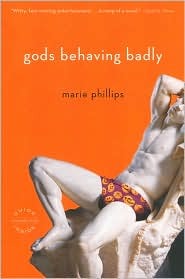
Book Review: Gods Behaving Badly

Title: Gods Behaving Badly
Author: Marie Phillips
Genre: Literary Fiction (Light)
Rating: B

140-Character Summary: Seven Greek gods living in a London flat; Apollo and Aphrodite fight; The sun goes out; A cleaning lady and boyfriend caught in the middle.

First 140 Characters: "One morning, when Artemis was out walking the dogs, she saw a tree where no tree should be. The tree was standing alone in a sheltered..."

140-Character Review: Charming love story with LOTS of lewd acts, coarse language, and irreverence toward the Greek gods. Fun characters in an interesting novel.

Hogwarts Challenge Notes:
Charms (Average People Become Heroes)

Thursday, December 3, 2009

Book Review: Dairy Queen

Title Dairy Queen (Unabridged Audio Version)
Author Catherine Gilbert Murdock (Read by Natalie Moore)
Genre YA Commercial Fiction
Rating B

Summary D.J. Schwenk is sixteen years old and doing her best (with a little help from her selectively-mute younger brother) to keep the family farm going. Her dad's hip replacement surgery is taking longer to heal than planned, her mom's busy working two jobs (perhaps just to stay away from the house), and her two older brothers are definitely staying away from the house (they have been ever since "the big fight"). And on top of all of that, D.J. has to deal with pain-in-the-butt, knows-he's-too-cool-for-school Brian Nelson being forced to help her on the farm. D.J. had usually been able to count on her best friend Amber to decompress, but Amber's been acting, um, weird. Really weird. Mostly about D.J. spending so much time with Brian. And when D.J. announces that she wants to be the starting running back for her high school's football team, well, everybody starts acting weird.

Review There were a fair number of good or really good things about this book. The characters were all genuinely interesting and complex, but totally believable. D.J.'s inner struggle about doing what makes her feel empowered, rather than just always doing what's expected of her, was engaging enough to keep me listening. The rest of D.J.'s family (parents and three brothers) and the two other characters that we get a fair amount of time to look at (Amber and Brian) are fraught with their own problems. We look at their problems through the first-person lens of D.J., but Murdock wrote her insightful enough (without being an adult) that we get a broad perspective.

And the inner-personal relationships are what it's all about when it comes to this book. You're left with a wee bit of a cliff-hanger. All throughout the book the tension and build-up between D.J. and Brian simmers (it wouldn't be YA without angsty love, would it?), and at the end you're wondering, "Wait, are they together or are they friends? Because I'm really not sure." But never to worry because there are two more books in this series (The Off Season and Front and Center), both of which are already released.

I'll be picking those books up for reading because the characters grabbed me. (I actually teared up at a couple of points.) But please note that I said I would be reading the books.

This was my first real foray into audio books and they're just not for me. I know a lot of people listen to audio books in the car, but I commute, so that wasn't an option. (And it would be rude to download it onto my iPod and not converse with my co-rider. That's not how we roll.) So I ended up listening to while laying on my bed (which is often how I read a book), BUT with a book, I can read a lot faster silently than an actress can dramatically read a book.

And a little bit more about the actress: Her Wisconsin accent was good (in so far as I could tell, never having been to Wisconsin). And she had a pretty wide range of "voices," I could keep all the characters straight (which was something I wasn't sure I'd be able to do during the dialogue with an audio book), but not all the characters' voices had much emotional range. It was most noticeable for Brian (who was a really important character to the book, with a lot of dialogue). I thought the actress always made him sound stoned. He could be saying something funny or getting vulnerable about his parents' marriage problems, and he always sounded like he was baked.

That's why I'll be reading the next.

None the less, thanks to the lovely ladies at Stacked who gifted me this audio book in a give-away on their blog. I enjoyed the book, appreciate getting exposed to great new YA series, and having a little audio book experience officially under my book belt.

Tuesday, September 29, 2009

Book Review: The Senator's Wife

Title The Senator's Wife
Author Sue Miller
Genre Literary Fiction
Category Women's Fiction
Rating B

Summary Delia is the long-time wife of philandering (former) Senator Tom Naughton, and she gets new neighbors on the other half of their duplex. Meri's husband, Nathan, has moved them back to the east coast (from the Midwest) for a teaching job at a prestigious university. These two women, who have little in common, meet and their lives become inextricably linked--both for the good and the bad.

First Line "From her perch in the middle of the backseat, Meri surveys the two in front--her husband, Nathan, and Sheila, the real estate agent. There is something vulnerable about the back of the head and the neck, she thinks."

Review Sue Miller is at the top of her literary-fiction-version-of-chick-lit game. She's very deft at taking women's intersecting lives and dissecting the thoughts and external forces that influence and shape them. She's relatively free of judgement, all around, as she puts both a 70-something stay-at-home wife and mother alongside a 30-something working wife and mother. Neither is seen as perfect, nor is either seen as not being in control of her station in life.

In addition to crafting the inner lives of her characters well, Miller is good at creating supporting characters and setting. Houses and towns, streets and parties are well populated and easy to imagine.

I think, if possible, the only thing I'd like to see Miller do is get us more into the minds of the male characters in the book, perhaps through dialogue. Both of the husbands remain enigmatic throughout the book--you know that they love their wives, each in their own way, but you also know they're both complicit in some of the problems that occur during the book. And, as much as you get a peek inside of Delia and Meri's thoughts, you're always left guessing about what the guys are thinking. The women become self-contained bubbles, often speculating on what others think, but rarely taking the steps necessary to either confirm or deny their suspicions.

Of note: I did count her down because Miller did a very weird thing where, instead of referring to the vagina technically or with a relatively-contemporary pop culture slang, she called it "sex"; i.e., "my sex was swollen." What the what?

But, while we're on the subject of "sex," Miller is pretty impressive in her ability to make sex within marriage seem really hot. Kudos to her.

Recommendation Fans of other chick-lit-disguised-as-literary-fiction titles, such as The Time Traveller's Wife, will probably like this book.

Monday, September 14, 2009

Book Review: Goy Crazy

Title Goy Crazy
Author Melissa Schorr
Genre YA Commercial Fiction
Rating B

Summary What happens when a semi-traditional Jewish girl (Rachel Lowenstein) in NYC falls for an Aryan Race poster child from the local Catholic high school (Luke Christensen)? Why, silliness and fun will ensue, of course. (Oh, and she might break her grandmother's heart, who will die.)

First Line "There is no way I'm dancing with Howard Goldstein."

Review I adored this very cute and fun read. I appreciated that I didn't see absolutely everything coming from a mile away, that the parents were dynamic characters (maybe I only love that because I'm an adult), and that the love triange was fun to read. I loved Rachel's voice--she was quite spot-on in her YA voice, but also not 100% self-absorbed or whiny. She was funny. What you'd hope your diary would have sounded like when you lamented having huge hair.

My minor drawback, and this could be because I'm a gentile, is that it was hard to figure out the significance of the Jewish religion v. ethnicity. It was seemingly very important to Rachel and her family, but then you find out that it's maybe not such a big idea, but it could be, etc. There was some back and forth with that that got to be a little wishy-washy to me, and struck me as trying to make something important sound socially acceptable; if marrying someone with like spiritual beliefs and/or sense of cultural identity is important to you, go ahead and say it. I don't think that means that you're necessarily saying anyone who is not one of God's Chosen Race is bad, it's just that you (personally) wouldn't marry them. However, maybe Schorr was trying to make the point that it's a confusing issue for Jewish girls as they come of age, but that wasn't entirely clear. (Especially based on the resolution of who Rachel ends up with that I won't spoil for you.)

Recommendation Fans of Lisa Loeb's short-lived Reality TV show, "#1 Single." (I think there are similar YA writers, but because the faith/ethnicity/religion is so important to the plot of this book, I'll leave these recommendations brief.)

Saturday, August 8, 2009

Book Review: Something, Maybe

Title Something, Maybe
Author Elizabeth Scott
Genre YA Commercial Fiction
Rating B

Summary Hannah wants to be really normal, but that's hard to do when your mom's job is doing internet chats in her lingerie and your dad is a Hugh Hefner-spin-off. Hannah does her best to be invisible, going through school and work (with her crush-of-ultimate-proportions Josh and irritating Finn) and biding her time until she can start college and get away from home.

First Line "Everyone's seen my mother naked."

Review That's a pretty good first line. And the book's pretty good too. Hannah is an interesting enough character, and you get enough of a glimpse at her home life that her ever-so-slightly whiny inner monologues are understandable. But the best part of the book is that Scott does a good job of portraying Hannah's parents in a two-dimensional light as well--they're clearly not perfect (or even close), but they're sufficiently complex and interesting to read about.

The rising action of the book and the climax were pretty gripping (as far as contemporary YA fiction goes) and caused a lump to rise in the back of my throat. Sure, I knew what was going to happen with Hannah's love interests, but there was enough meat on the bones of this story to make it a satisfying read.

Note: I read this book because I'd previously read Scott's Perfect You, which wasn't that great, but had a teaser for this book in the back, and this book was far better. I'd encourage anybody who had even a little bit of interest in Scott's earlier works (even if it wasn't jaw-dropping awe) to give this one a shot.

Recommendation Anybody who is a fan of light, fun YA fiction (with romantic undertones and family drama) should enjoy a good bit of quick reading in this one.

Tuesday, July 14, 2009

Update to Book Review

I just made some significant changes to the book review for Megan Meade's Guide to the McGowan Boys by Kate Brian (lowering it an entire letter grade).

If you get this via email (and read the review yesterday), you'll want to check out the revised content which includes some discussion of the parental units and the resolution of the book.

Book Review: Megan Meade's Guide to the McGowan Boys

Title Megan Meade's Guide to the McGowan Boys
Author Kate Brian
Genre YA Commercial Fiction
Rating B

Summary Army brat Megan Meade's parents are being shipped to South Korea, but Megan doesn't want to go. When her parents drop the bomb that she can move in with their old family friends, the McGowans (and their seven sons), she thinks that maybe she's made the wrong decision. Is South Korea so bad? Because living with the seven McGowan boys is pretty bad... but it can also be pretty good.

First Line "'Megan, we need to talk.'"

Review I'm not going to beat around the bush: this book made me cry. And not in a bad way. In a totally awesome way.

Megan was a truly believable character. At first she's shy around the boys and afraid to stand up for herself. I totally got that. Which is probably why when Megan feels totally alone, surrounded by a family of boys who hate her guts, she longs for her parents. Sure, South Korea is far away, but at least she'd get to be with people she loved, right? Dude, I cried hard. Never fear though, she eventually grows (as all good protagonists do).

Megan wasn't the only character I "got." The majority of her brothers were sufficiently complex and cool (the two youngest ones weren't in it enough for me to remember how to tell them apart except that I knew they weren't teenagers). They were all very, very believable and interesting to read about and try to understand, and at times I totally got Megan's problem. Guys are hard to read.

There were a couple of character problems that lowered my grading of this book. One: her friends--they kind of ran together, and Brian might have been smarter to cut a character out to make this a stronger piece in her story. Two: the McGowan parents--they are written as both involved/caring parents and clueless parents who have no idea their sons are terrorizing Megan. Not really believable. Additionally, at the climax of the book, when Megan drops a huge bombshell on them, they respond in a way that's incongruous of smart parents--they let her make a crazy decision without trying to talk it out and/or even inform the McGowan boys of her decision. Weird. Very weird.

Related to that, I had a plot problem that bothered me (and lowered the grade). The resolution isn't really a resolution. I mean, sure everything gets resolved, but you just have to assume that because Megan goes back to loving life. But how does that happen? We only see her talking with a couple of the McGowan boys--not even the one that she develops the deepest relationship with--and we're left to wonder how that all got smoothed out.

Another minor draw-back to this book was its cover, the styling is completely outdated and the boys were supposed to be "so cool," but the clothes were kind of lame for 2009 (only on the cover, her descriptions in the book weren't as specific, so they didn't get dated). Granted, the book was published in 2005, but Brian's Private Series is hugely popular, so you'd think that her publisher could be bothered to update the cover of her backlist title as well (or edit this one to use more non-descript imagery like their cover of her book The Virginity Club).

Recommendation Fans of YA books about girl-meets-boy (or seven boys) and the conflicts between the sexes will enjoy this book. I'm even recommending to myself that I go out and buy more of Brian's books (even though I've always thought the rest had really cheesy hooks and avoided them like the Black Plague).

Thursday, July 9, 2009

Book Review: The Geek Girl's Guide to Cheerleading

Title The Geek Girl's Guide to Cheerleading
Authors Charity Tahmaseb and Darcy Vance
Genre YA Commercial Fiction
Rating B

Summary Self- (and school-) proclaimed geek girl, Bethany Reynolds, and her equally geek-tastic friend, Moni (aka, Ramona, "The Pest"), decide to upset the balance of power at their Minnesota high school and try out for cheerleading... and make it. And then (with the power shifted) things start to shift around for both of the girls--boys, school, friends, etc., all change in the lives of these two charming geeks.

First Line "It is a truth universally acknowledged that a high school boy in possession of great athletic ability must be in want of... A bowl of oatmeal."

Review This book was a fun, quick read that I finished in a night. And thought about for the next day. Then I added the attributes of smart and a fresh twist on a currently-hot well-worked plot trope of mixing classes.

It's fun and quick because the dialogue is funny and sounds like teenagers living their actual lives, instead of sounding like adults writing how they think teenagers talk.

It's smart because it didn't fall into the expected trap (that I feared it might) where the geek girl, after dating and then being spurned by the cool guy, realizes that the geek guy who was her friend all along is really the man of her dreams. They actually write:
"'You know those teen movies, the ones where there's a girl and these two guys, the jock and the dork?... The whole audience knows she's supposed to end up with the other guy,' he said. 'You know, the dork?' I gave the slightest of nods. 'Well, this isn't the movies... And I'm not that guy.'
'You're not that guy." (p. 232).
They bucked traditional teen lit stereotypes at this point and at a couple of other points as the story progresses further. Very smart.

It took a fresh twist on the current plot device that's popping up everywhere (I actually found this book in a display of "Geek Girl" YA books at Barnes & Noble) by fusing their new work with a work of classic literature, Pride and Prejudice, as a motif throughout the book. The themes from that classic work of literature show up in this book as well, and influence these characters' thinking, validating Michael Chabon's quote, "All noves are sequels; influence is bliss." This isn't to say that their book is simply derivative, it's a blog-style pat on the back to say, "Kudos for honoring the great authors who have come before you and showing that their work can be accessible, even to the youth of today."

Recommendation This was a fun read and I recommend to people who have enjoyed books by authors such as Susane Colasanti (e.g., When It Happens), Josie Bloss (e.g., the Band Geek Series), Kieran Scott (e.g., Geek Magnet), or Elizabeth Scott (e.g., Perfect You).

Thursday, May 14, 2009

Book Review: American Wife

Title American Wife
Author Curtis Sittenfeld
Genre Literary Fiction
Rating B

Summary Read about nearly the entire life of "fictitious" First Lady, Alice Blackwell (nee Lindgren) and see how all of that life (with special emphasis on one particularly critical event) has been one large cosmic build-up to a key day in the Presidency of her husband, Charlie Blackwell (who bears nearly no resemblence to former President George Bush).

First Line "Have I made terrible mistakes?"

Review I picked up this book at the airport when I finished my other book that I'd brought on the trip and needed to have something to get me back home. I am quick to admit that I have a big-time author crush on Curtis Sittenfeld, but I'd put off reading American Wife because I didn't want to read some liberal rip-off/snark of the Bushes (and I don't even particularly like the Bush family, in the Presidential-sense).

But that's the beauty of Sittenfeld, she fooled me. You don't even get to the time when the near-Laura-Bush meets the near-George-Bush until page 115, and by then you love the near-Laura-Bush character. I'd never given much thought to Laura Bush, but if she's anything like Alice Lindgren (which Sittenfeld sites both in a preface to the book and in the acknowledgements her research process), then she is a woman of strong character.

The section about the tragic event that "shaped" her was heart-breaking (and I made a hot mess of myself, crying on the plane), but I think that Sittenfeld (for literary purposes... because this is--don't forget this--a work of fiction) played this up too much. Sure, what happened was tragic, and probably Alice never really dealt with it (not in the true, get-your-feelings-out sense), but that still, forty years later, that one fateful night was shaping her actions and her feelings about her husband of twenty-plus years? I found that a little hard to swallow.

The other thing I found hard to swallow (and this is typical Sittenfeld) was the obsession with descriptions. She was on some kind of fanatical food kick and would describe everything that was on a buffet. She was also doing this weird thing with the interior of buildings and rooms and would described the carpet, the walls, the brick-a-brac, the smells, everything, and it got to be a little much. Take this example:
"We step into the living room, which holds a black leather couch and matching chair as well as a low coffee table, all facing an entertainment system--a triptych of shelves whose centerpiece is an enormous television set, flanked on one side by a stereo, speakers, and CD and DVD cases, and on the other side by several rows of propped-up collector plates featuring either horses (they gallop against a backdrop of western landscapes, their bodies at sharp sideways angles, their manes and tails blown fiercely by the wind) or else American Indians (a chieftain gripping a tomahawk with an eagle perched on his shoulder, a woman in long black braids and a fringed leather dress kneeling devotedly over a papoose)... The walls of the living room are covered in wood paneling, the carpet is mauve, and a doorway leads to an overcast narrow hall at the end of which another doorway opens onto, from my vantage point, a strip of a sunny room with a black-and-white checkerboard floor--the kitchen, I assume. The television set is on, set to Dr. Phil," (p. 506).
Maybe that was a literary device that was over my head. I wouldn't put it past Sittenfeld (because I harbor a chick crush on her). None the less, that got tedious and I did some skimming at parts.

Even still, I loved it. Mostly--and I'm not sure this is what Sittenfeld intended--I loved it because I fell in love with the Charlie character. I actually liked him more as a character because he said who he was and owned up to it, unlike Alice. In the climax of the book she, while she's First Lady, does something incredibly stupid (in regard to being naive about her political position as First Lady) and Charlie says, "Every decade, you like to pin me to the ground, pull open my mouth, and take a shit right into it," which I thought was genius dialogue. Charlie stays Charlie thoughout (which is probably a liberal slap at how Bush stayed "Bush" even when his foreign policy should have changed), but in regard to literature, it made him out to be an interesting character to juxtapose with Alice.

I only marked this book down (albeit somewhat significantly, from an A+ to a B) because of her excess of description and the implausibility of the role of the critical event in Alice's high school career affecting her so strongly (as noted above). That's not to say that I won't be keeping this book on my shelf and re-reading the courtship parts over and over again to pet my Sittenfeld crush.

Wednesday, April 15, 2009

Book Review: Perfect Chemistry

Title: Perfect Chemistry
Author: Simone Elkeles
Genre: YA Fiction
Rating: B

Summary (from BN.com): "A fresh, urban twist on the classic tale of star-crossed lovers.

"When Brittany Ellis walks into chemistry class on the first day of senior year, she has no clue that her carefully created “perfect” life is about to unravel before her eyes. She’s forced to be lab partners with Alex Fuentes, a gang member from the other side of town, and he is about to threaten everything she's worked so hard for—her flawless reputation, her relationship with her boyfriend, and the secret that her home life is anything but perfect. Alex is a bad boy and he knows it. So when he makes a bet with his friends to lure Brittany into his life, he thinks nothing of it. But soon Alex realizes Brittany is a real person with real problems, and suddenly the bet he made in arrogance turns into something much more. In a passionate story about looking beneath the surface, Simone Elkeles breaks through the stereotypes and barriers that threaten to keep Brittany and Alex apart."

Review: The first line of the Barnes & Noble summary says this is a fresh, urban twist on the Romeo & Juliet tale, but that's only half right. It's urban, but not fresh. Some things were changed up, but only the tiniest bit, I (who hadn't read that summary before buying the book at Border's) didn't have to read beyond page 19 (the beginning of chapter 2) to know this was a re-telling of Romeo & Juliet. Don't get me wrong, I'm all for re-imaginging the classics to get kids to read and consider those eternal truths; I just think it can be done a little bit more creatively than this.

The star-crossed lovers was so obvious that it wasn't even any work to figure out what was going to happen. I think Elkeles could have made it a little more subtle and have enhanced the story-telling. One simple idea would have been to make the two lovers to come from the same side of the "tracks" but have some other smaller difference and show how external forces shape a relationship. Also, that could have been really interesting to see how a Latino gang member and his Latina girlfriend (who's not in the gang, but still lives in that culture) have differing views of said culture. Maybe that's just me, maybe I'm one of those weird readers who wants to have to work just a little bit for my story.

But still, I liked both Alex/Alejandro and Brittany; neither were too cookie-cutter and they made for interesting glimpses into life behind the sterotypes. Also, Elkeles did the alternating POV between Alex and Brittany, which I'm a total sucker for. Kudos to her.

I think I'll hang on to this and maybe give it one more glance before selling it at 1/2-Price Book Store.

Book Review: Two-Way Street

Title: Two-Way Street
Author: Lauren Barnholdt
Genre: YA Fiction
Rating: B

Summary (from BN.com): "This is Jordan and Courtney, totally in love. Sure, they were an unlikely high school couple. But they clicked; it worked. They're even going to the same college, and driving cross-country together for orientation. Then Jordan dumps Courtney -- for a girl he met on the Internet. It's too late to change plans, so the road trip is on. Courtney's heartbroken, but figures she can tough it out for a few days. La la la -- this is Courtney pretending not to care.

"But in a strange twist, Jordan cares. A lot.

"Turns out, he's got a secret or two that he's not telling Courtney. And it has everything to do with why they broke up, why they can't get back together, and how, in spite of it all, this couple is destined for each other."

Review: Okay, so in all honesty, I knew what the secret was on page 53 of 288. I knew almost from jump. I also knew that said secret would come out, what her initial reaction would be, and what the eventual outcome would be. So, that being said, the fact that I kept reading (and couldn't quite make myself put it down) and read the whole thing in about three hours must mean there was something good, right?

Well, yeah. As per my usual, the Jordan's POV was really amusing (and actually so was Courtney's). She wasn't too stereotypical (except in her reactions to the secret). The only thing that I wasn't 100% crazy about were the flashbacks. I'd rather have had more in the present tense and have the stuff from the past tense just woven in via dialogue or remembrances in the narrator's internal monologue. Don't get me wrong, the back story stuff was essential (and interesting in it's own way), but it threw the pacing off. It was during the back story stuff that I found myself able to put the book down (and go to the bathroom or whatever other super important stuff I was supposed to be doing on a Saturday afternoon).

So, if she'd have changed things around (perhaps moving all the back story stuff to the front and just telling chronologically or following my advice to make the back story not really "back story"), then it would be all good and could move up to an A in my literary gradebook.

Sunday, February 1, 2009

Book Review: Loving Frank

Title: Loving Frank
Author: Nancy Horan
Genre: Historical Fiction
Rating: B

Abbreviated Summary (from the back flap): "...Mamah Borthwick Cheney... struggles to justify her clandestine love affair with Frank Lloyd Wright. ...In 1903, Mamah and her husband, Edwin, had comissioned the renowned architecht to design a new home for them. During the construction of the house, a powerful attraction developed between Mamah and Frank, and in time the lovers, each married with children, embarked on a course that would shock Chicago society and forever change their lives."

Review: This book was selected for my January book club at my local library--one of the faithful members had previously read the book and really liked it, so we all agreed to put it on the list. Going into the book I only knew that it was Nancy Horan's literary debut (in fiction) and that it was based on a true event (not unlike this other book club selection).

So, armed with that tiny bit of information (and the summary from the back of the book), I start reading. Early on I underlined this wonderful bit of dialogue from Edwin Cheney (said to Mamah at their wedding reception), "'Take my love for granted,' he said, 'and I shall do the same for you.'" How sweet, right? I highlighted that portion and remember thinking that Edwin Cheney was such a wonderful man and wouldn't it be great to have that kind of love?

The problem is that Edwin didn't have that kind of love... well, he did, Mamah didn't. She and Frank Lloyd Wright (we'll just call him FLW because I'm lazy and this post might get a little long) were selfish jerk-offs who left behind a total of nine children to run off to Europe in search of "true love." There is a whole large middle section of the book where the well-educated Mamah (a woman with a master's degree wasn't commonplace in that day) meets Ellen Key, a philospher and writer who is fighting for the Woman's movement in Europe to promote the ideals of her "free love" philosophy. Key, according to Horan, theorizes that any love which isn't all-consuming and real isn't actually love and cheapens the marriage institution. However, some time later Key and Borthwick Cheney run into an odds about how this free love works itself out in marriages with children--Key strongly holds to the importance of motherhood and actually is working to get stay-at-home moms compensation for their domestic work.

Partway through the story I was getting a little wrapped up in how Edwin got the short end of the stick (according to Horan's somewhat fictionalized account he was unwaveringly faithful and patient), so I Googled him to see if he ever got re-married or anything. Check this out (I put that link so that those who don't want to be spoiled about what happens to the Cheney family, kids included, don't have to read it). Anyway, I read that, knew what was going to happen to Mamah and the kids, and still found myself weeping at one point in the novel.

I didn't like Mamah or Frank, I found them to be insufferably selfish, but here are some of things I wrote in the book as I was reading:

"At this point [page 345, after the climax alluded to in the above link] I have to stop, the sadness is immense. Regardless of the feelings one might have about how they got into this situation, the tragedy is startling. These were real people who were [spoiler censored]."
The fact that kept hitting me as I read this, and was making judgements about whether I liked or disliked particular characters, was that these weren't just characters, they were real people. I wrote:

"I'm tempted to liken Mamah Borthwick Cheney to Rose Mary Walls [from The Glass Castle], two historical women who elevate their own hapiness as paramount, espousing the ideal that self-actualized individuals will foster a utopian society. What I find interesting is that Mamah actually seems to be most actualized when helping others (with her children, translating books and personal letters). I need to remember that these are both real women whose lives are told in second-hand accounts and curb the judgementalism."
Anyhoodle, enough of my 50-cent words and personal feelings about the characters... on to the writing. Horan did a fantastic job, especially considering this was her first novel, in taking the scant information available and spinning it into a fully-developed story with rich characters, making them more than charicatures (which can so easily be done with realitively well-known historical figures). The only real flaw I saw in her writing is that after the afore-mentioned climax she switched to the POV of FLW and the present tense (all had previously been told in third-person from the POV of Mamah in past tense). I ran into this present-tense writing in Pratical Magic, and I didn't like it then either. Technically, an author can do whatever he or she darned-well pleases with a book, but it's generally accepted that books are written in past tense, so to read in present-tense is jarring and you find yourself getting hung up on that. I think she did this because the tone of the book is 180-degrees different at this point, but the switch to FLW's POV and the change in what was going on would have been sufficient. It came across as gimmicky, and that's not the last taste you want to leave in readers' mouths.

The other flaw I found in this book, and why it only earned a B rating, was that the message that Horan wanted to send with the book, based on some interviews I saw online and a print interview that was included in the back of the version I purchased, stated that one reason for wanting to write the book was to show that the status of women in society hasn't really changed that much in the 100 years since this affair happened. The problem I have is that when one reads about how Mamah and FLW abadoned their children, why should things have changed? Why should we be more accepting of that? Why should that be applauded by society?

She wrote Mamah and FLW's realtionship as if they were experiencing true love, but I wrote at one point (as the relationship is becoming more mature),
"Mamah says she left Edwin because of lack of true love, but the way she views FLW when the lustre wears off is oddly familiar (see p. 134). One cannot look to others as inspiration for growth (FLW) or vitality in life (Mamah). It would seem that Mamah knows the good she should do (as seen in her remorse regarding her children), but is either too weak or selfish to do so."
If Nancy Horan wanted to create a treatise about how true love should be espoused, why not write a story that shows this actual true love? I believe that she wanted to write Mamah and FLW with their flaws, that their relationship wasn't always happy, but it just waters down her message. I think (and this is absolute and total speculation) that Horan wanted to tell a story, I think (based on her interviews) that her growing up in Oak Park, Illinois, and knowledge of FLW's life made him to be an interesting character, and she wanted to tell a tale about the role of women in society; unfortunately, she couldn't bring all three together. I think she should have scrapped Mamah and FLW (and just developed fictional characters) and told the story she wanted to tell; that, or drop the pretense about true love.

That being said, it's a good book in terms of writing (save the first-person nonsense in the denoument), and I'll be interested to read Horan's next book with fictional characters--see if she can develop characters of her own from nothing.

Saturday, January 3, 2009

Book Reviews: Sweet Seasons Novels 1-3

Titles: Sweet Seasons Novels 1-3, The Summer of Cotton Candy, The Fall of Candy Corn, and The Winter of Candy Canes
Author: Debbie Viguie
Genre: Young Adult Fiction, Christian
Rating: B

Abbreviated Summary (from the Back Flap): They're fun! They're quirky! They're Sweet Seasons--unlike any other girls' books you've ever read. You could call them alternative, God-honoring chick lit. Join Candace Thompson on a sweet, lighthearted, and honest romp through the friendships, romances, family, school, faith, and values that make a girl's life as full as it can be.

Review: A little while back I reviewed With This Ring, I'm Confused because I was looking to see how published authors did light-hearted stories that had characters with doses of morality; I did that book because I couldn't find any YA Christian literature. However, lucky for me, I was able to find this series (and another, The Carter House Girls series, that I'll review separately) that fits the YA Christian fiction bill.

These books were decent, I started to like the characters the further they went on--perhaps because this author is kind of new and maybe her writing is getting better each time. Whatever the cause, Candace (and her friends and boyfriend) became more likeable as time went on. What irritated me with this series though is the same issues I've had with Kristin Billerbeck (see the With this Ring... review linked above), Christian fiction is way too heavy-handed. If you want to make your message really clear, make it clear, but don't preach. I think the reason I find this so grating is because the target audience is very likely Christians, who could probably draw the conclusions themselves without having the author come right out and put in a little prayer. Call me crazy, but some times I like to actually have to think for myself when I'm reading.

That's not to say that when the final installment in the series, The Spring of Candy Apples, comes out in late February 2009, that I won't be picking it up. Maybe I'm a glutton for punishment, or I can't stand to not find out what school Candace ends up going to (although I'm pretty sure I could make a safe bet now), but I've got to close the loop on this series.

All in all, a decent series for young adult readers (I'd say maybe 14-17, any older than that and it might be too silly and saccharine). I gave it an B because, as I read the other YA series, I found that (even with its flaws), the Sweet Seasons series could have been worse. The B is probably relative.